There is a strong belief among both the general population and medical practitioners that physical inactivity and poor diet are associated with cognitive decline as we age.  Physical conditioning and diet are closely associated with cardiovascular health that, in turn, is associated with heart disease and stroke.  Indeed, better physical condition as we age reduces some of the wear and tear of aging on the brain as evidenced by less atrophy and white matter disease with aging.

 Another recent study adds to the evidence that what’s good for the heart is good for the brain.  The study (“Cardiovascular health through young adulthood and cognitive function in midlife, Annals of Neurology, 2013, 73: 170-179) followed cardiovascular health of participants over the course of 25 years starting age 18-30.  The assumption was that those who maintained greater levels of cardiovascular heath would display better cognition in midlife.

Cardiovascular heath was determined by measuring seven factors that are influenced by life style choices we all make throughout our life.  The factors include maintaining healthy weight, eating a healthy diet, not smoking, maintaining physical fitness, keeping cholesterol below 200, controlling blood pressure, and keeping blood sugar below 100.  The hypothesis was that the greater the number of these factors kept close to optimal after 25 years the better the cognitive test scores (memory, speed of thinking, and executive function).

Indeed, the greater the number of cardiovascular health factors that remained optimal the better the scores for speed of thinking, memory, and executive function.  However, as might be expected scores on all of these variables were generally lower in middle age than when 25 years younger.  The factors most predictive of maintaining better memory into middle age were not smoking, keeping total cholesterol low, and maintaining healthy blood pressure.  Interestingly, diet had little effect in this study.

Life style choices modestly impact our long-term health.  However, cardiovascular health is determined by both our choices and our biology – many will have suboptimal scores on many of these variables even when they make good choices as they age.  We need better data for the impact of treatments of these long-range health outcomes, as this study did not separate those who naturally benefitted from healthy choices versus those who were optimal because of treatments (e.g., taking blood pressure medications, statins) as well as choice.  In short, we need to control what we can such as exercising regularly and not smoking.

The lesson is that we need to be strategic and proactive throughout our life toward the goal of having better cognitive functions as we age.  Efforts at maintaining cardiovascular health as we age pay dividends in the long run.  What’s good for the heart is good for the brain.

Tags:

I keep hoping for more useful research on treatments and management techniques that may potentially benefit those with memory loss and their caregivers.  There are three recent studies that caught my attention as examples of movement in the right direction.

First, “The effect of stimulation therapy and donepezil on cognitive function in Alzheimer’s disease” (BMC Neurology, 2012, 12, 59).  The study compared the effects of stimulation therapy, treatment with donepezil (Aricept), or to combined treatment during the first year after diagnosis with mild to moderate Alzheimer’s disease.  Stimulation therapy consisted of multiple elements including physical activity (e.g., dancing, walking, fitness training), as well as cognitive and social activities (e.g., reading, listening to music, crossword puzzles, reminiscence) for at least 30 minutes each day 5 times per week.  Donepezil (or placebo) was started at 5 mg and increased after four weeks to 10 mg for the duration of the study.

Interestingly, all treatments faired the same after one year.  On average, all participants had similar cognitive scores at the beginning and the end of the year.  Although there are many limitations and interpretations of these findings, I was surprised that the combination of drug therapy and stimulation therapy did not improve outcome at one year.  We need more of this type of studies with better client selection and over a much longer duration.

Second, there is widespread and prolonged use of antipsychotic medications in persons with dementia to manage such behaviors as agitation, aggression, delusions, hallucination, and/or mood changes despite warnings and cautions.  Even more troubling to me is that once these medications are started, they are continued indefinitely.  According to a recent literature review in the Cochrane Database Systematic Review (“Most dementia patients can safely stop antipsychotics,” Medscape, April 02, 2013) discontinuation of these medications does not cause relapse in most patients in skilled nursing.  This review should help remind us that all medications should be reviewed often and that antipsychotics in the demented should be written from the beginning with a taper/stop date.

Third, common clinical lore suggests that use of antipsychotics to treat behavioral disturbances in dementia may increase mortality.  A large prospective study in Japan compared those who were treated with antipsychotics with those who were not.  There was no greater mortality after 10 weeks for those on antipsychotics.   The most common causes of death were pneumonia, cardiovascular events, and cancer, respectively.

We need to extend and broaden our working knowledge through studies like these that challenge our assumptions and address practical issues regarding treatment and management of progressive memory disorders.  There are many questions; there is too much emphasis on finding the elusive cure and too little use of scientific methodologies to gather data that guide our day-to-day treatment decisions.

Tags:

I read yet another newspaper article on Alzheimer’s disease touting “early diagnosis.” Now that it is clear that brain changes of Alzheimer’s disease develop decades before there are symptoms, the push is to make a medical diagnosis well before there are any symptoms. Furthermore, if we pursue this strategy, many (based on current data as many as 30%) will be diagnosed who will never develop symptoms. We will instill fear and hopelessness needlessly.

“Alzheimer’s disease’ a label that has no usefulness in the real world. Everyone with Alzheimer’s disease does not become demented. The label provides a false level of understanding along with an expectation that there is nothing that can be done. There are effective treatments for memory loss but they are not medical and therefore undervalued. Furthermore, a diagnosis should direct you to actions that tell you what to do. What do you do if you are diagnosed with Alzheimer’s disease?

The question is wrong. Ask instead what is the primary functional change that marks most progressive mental decline? The answer is that there are progressive changes in short-term memory – the ability to learn new information. The better approach is to target measuring short-term memory. If I am told that I have Alzheimer’s disease, there is no direct action to take. On the other hand, if I am told that I have changes in short-term memory, it is clear what to do.

If I have short-term memory loss, I can develop strategies that engage long-term memory. Memory loss occurs well before dementia. Do this while you are still in control of your future. It allows you to be proactive. You can get ahead of progressive memory loss. You can be proactive rather than reactive about your future. This proactive plan should be a part of advanced directives.

Simply, the plan needs to include family, as they need a say in the details. In addition to legal directives, the plan should address how to monitor ability to do complex and simple finances and cooking as well as how to transfer decision-making powers before they are compromised. The plan should advise on how to monitor driving, how to initiate cessation of driving, and how to have a life if I can no longer drive.

The plan should also direct others on how to make my life good even if I can’t remember what I just did or what to do next. If I am reduced to living in the moment, I need to make those moments joyful either by doing or reminiscing about the things I love. As I always tell my audiences, don’t make me play bingo. I’ll get ornery. Instead, I love to travel. Visit museums. Watch movies. Walk in the mountains. Play with my cats. Build my life around my retained interests and skills for as long as possible. I should put this plan in writing now in case I need it in 10 years. The objective is to have a good life even if my memory fails.

Tags:

The second most feared medical diagnosis – next to cancer – is Alzheimer’s disease, the most common cause of dementia.   What is Alzheimer’s disease?  This not such an easy question to answer as it may seem.  Ultimately, the diagnosis requires confirmation by autopsy or biopsy but even here the diagnoses is uncertain.  A diagnosis is made by clinical criteria based on typical features.

“Typical Alzheimer’s disease” mainly affects the elderly – onset over 65.   Most often Alzheimer’s disease is “sporadic” – meaning there is no prior family history.  The symptoms do not develop rapidly but rather come on slowly over the course of many years.  The first sign of possible Alzheimer’s disease is short-term memory slips such as forgetting conversations, getting lost, or forgetting events.  As the condition progresses there are deficits in skills in addition to memory such as problems with naming objects, problems with arithmetic, problems with multi-tasking, and/or problems with reasoning.  Despite withdrawal and apathy, social skills are retained in the early stages.  Progression unfolds over the course of several years.

There is a tendency to diagnose Alzheimer’s disease in everyone over 60 that displays memory loss or confusion by default.  However, there are treatable conditions that may be missed without adequate diagnostic workup.  For example there are the “worried well.”  These are persons with mild memory complaints that are difficult to differentiate from normal aging.  There is evidence that a portion of the worried well actually have very mild Alzheimer’s disease that will become clearer over the next few years.  Typical memory screenings are insensitive to these changes at a time when proactive treatment is essential.  The best place to start if you are worried is with a rigorous evaluation by a memory expert – often a neuropsychologist.

What are some common mimics of Alzheimer’s disease?  Depression is associated with and sometimes confused for Alzheimer’s disease.  However, the depression must be severe to create actual confusion, which is more tied to attention/concentration than actual short-term memory loss.  Late life depression is a risk factor for Alzheimer’s disease and, while very treatable, needs to be followed over time by memory assessments and proactive planning.

Metabolic disorders (e.g., low B12, low, diabetes, or high thyroid levels) and infections (e.g., herpes encephalitis, tertiary syphilis) may be associated with confusion and are treatable. Tumors and normal pressure hydrocephalus (shunting may make Alzheimer’s disease worse so careful differentiation is essential) are rare but need consideration.  These are very avoidable mistakes with proper medical evaluation.

Cognitive impairment due to vascular disease may closely resemble or may accompany Alzheimer’s disease.  Vascular cognitive impairment, like Alzheimer’s disease, is much more common with age.   Despite traditional dogma, vascular dementia may slowly progress rather than manifest as a “stepwise” decline.  Treatable issues like hypertension, smoking, alcohol, and diabetes need to be addressed during the evaluation.

Other mimics include frontotemporal degeneration, Lewy body disease, and posterior cortical atrophy.  Frontotemporal disorders first show up as changes in personality or expressive language deficits rather than memory loss.  Lewy body disease often has less severe memory loss, Parkinson’s features, and hallucinations.  Posterior cortical atrophy presents with problems of sequencing, spelling, and arithmetic rather than memory.

A more detailed review of these and other considerations can be found in Practical Neurology (2012, 12, 358-366).  Don’t just assume that mental changes associated with aging are by default Alzheimer’s disease and hopeless. If you have concerns, don’t put off a good memory assessment.

Tags:

It has become increasingly clear that most progressive dementias slowly unfold over the course of several decades.  For example, Alzheimer’s disease forms decades before there are any signs or symptoms.  It doesn’t appear suddenly or show up as a “conversion” from Mild Cognitive Impairment.   This is good news.  We can be proactive by life style and planning years ahead instead of just reacting to changes after they occur.  Life style interventions must start decades before problems show themselves.

 The issue to resolve is what life style changes is worth the effort.  Exercise is the one factor that is emerging as a clearly protective of the brain.  Many short-term studies have suggested that increasing levels of fitness now pays benefits for future brain health.  The Cooper Center Longitudinal Study, Cooper Clinic in Dallas, published a study that prospectively followed a large number of participants over the course of several decades (nearly 25 years on the average).  Additionally fitness was measured objectively, with a treadmill test, not by self-report.

The study included 19,458 men and women who were in midlife (average age = 49.8) beginning in 1971.  Fitness level was measured by maximum time on treadmill test.  Dementia was determined from Medicare records for participants who were 65 and older by December 2009 – 1659 cases of dementia in this study.  Fitness at midlife was associated with a lower risk of dementia from all causes (e.g., Alzheimer’s,  vascular).

There are a number of possible benefits of fitness for the brain.  First, high levels of fitness are associated with reduced effects of the wear and tear of aging (i.e., less shrinkage and lessened white matter disease in the brain).  Second, maintaining higher levels of fitness reduces the risk of diabetes and hypertension.  Third, exercise may improve hippocampal (the short-term memory structure) function and induce the release of brain growth factors, which increase neuroplasticity.

Even if you are over 50, it’s not too late.   The best way to protect your brain is through physical exercise.  It is estimated that fewer than 10% of the US population reach the minimal goal of at least 2.5 hours of moderate exercise per week.   You only need a good pair of comfortable exercise shoes and comfortable clothing.   Start slow and gradual and work toward consistency.

Tags:

Alterations in short-term memory are the hallmark of Alzheimer’s disease as well as a whole host of other brain changes that can, in time, erode our ability to make complex decisions such as handling finances or making legal documents.  The changes are subtle in onset and slow in progression.  Neither our own self-evaluation nor that of competent professionals can detect the changes by observation in the very early stages.  Despite our personal beliefs about our selves, most will not “know” when to give up the finances or when to stop driving.

 Changes in memory are not the province of medicine.  Medical screenings are insensitive to early changes in memory and brain scans produce too many false positive results.  Verbal learning tests used to assess short-term memory are better at detecting risk than are biomarkers such as PET scans. We need to refocus our efforts away from diagnosis.  A diagnosis of Alzheimer’s disease is demoralizing.  Monitoring memory is empowering.  There is so much you can do about changes in memory.  We need to detect changes and to monitor memory as comfortably and routinely as we manage our wellness.

I propose a simple plan.  There is no brief screening that will serve us well to protect our future.  These screenings are devised to detect Alzheimer’s disease, which is more than just memory loss.  Screenings are too insensitive and superficial.

I have given this quite a lot of thought as a result of my discussions with Tony Curatolo, Ciccarelli Advisory Services.  This is a plan that will be helpful to allow informed decisions regarding your ability to make complex decisions regarding medical, financial, or legal matters:

  1. We all need baseline memory evaluation that is friendly, thorough, and affordable.
  2. The assessment should consist of an interview that is structured around memory, verbal problem solving, and speed of thinking.
  3. The assessment should directly involve family members (involved in all aspects of the assessment) and include detailed feedback on how your brain is working (strengths as well as weaknesses).
  4. I suggest the following components of the basic evaluation for someone without noticeable concerns: a quantifiable checklist (also completed by someone who knows you well) on the present state of your brain, a verbal learning test, a paper and pencil arithmetic test, a measure of speed of thinking, a measure of verbal problem solving, and a global index of confusion.
  5. This evaluation is very much like routine blood work or monitoring your investments.  It provides quantifiable scores and feedback that you can follow over time to monitor progress and to anticipate future needs.

I have developed such an evaluation that I plan to make available in the near future.   Be proactive with your memory just as you are with your health, finances, and legal directives.  The best strategy for beating Alzheimer’s disease is to proactively manage and monitor your memory.

Tags:

“Alzheimer’s epidemic puts advisers – and their practices – at risk” (InvestmentNews.com, February 26, 2013).  “Clients with Alzheimer’s pose “scary” legal risks” (InvestmentNews.com, February 13, 2012).  “Money woes can be early clue to Alzheimer’s” (New York Times, October 2010).  The worry has been there for some time.  The problem of risk management is as clear as is the solution.

 Alzheimer’s disease unfolds over the course of 30 or so years, progresses slowly, and does not produce disability until well advanced.  Progressive dementias unfold like reverse development.   First in, last out.   We learn walking and talking very early.  Managing technology and complex decision-making comes much later.  It’s no wonder that complex decision-making, like investing and managing money and legal decisions, are the first signs of decline.  It appears to sneak up on us – but it does not.

Alzheimer’s disease gives adequate warning to allow developing a proactive plan that gets ahead of changes and unfolds based on feedback from objective data and self-determination – just like long-term investment strategies and advanced directives.  It seems to me that the solution is obvious.  We must quit waiting for a medical diagnosis as that puts us in a reactive rather than a proactive stance..  The problem early on is progressive and measurable short-term memory decline.  A brain scan or a memory screening, a MMSE, does not detect memory change.  Memory change is not a medical problem.

Memory is not solely the domain of medicine.  All professionals (i.e., financial, legal, medical) have an obligation to their clients to help them monitor their own memory with objective and quantifiable assessments.  As we gather data to set up financial and/or legal estate planning, we owe it to our clients to begin memory assessment as part of the program from the start.  We must help clients make their decisions fully informed of how well their memory is working.  We need to help them be proactive and act in their own best interests before decline becomes more than just forgetfulness.

I have been working with Tony Curatolo, Ciccarelli Advisory Services, to develop a plan to better serve his and my clients.  As we discussed the many complex issues of detecting decline, it became clear that neuropsychologists are reluctant to discuss money matters and financial advisors are reluctant to discuss memory.  We both need to change our practices as our clients are the ones who are getting short changed.

Next week I will outline a simple, proactive plan that may serve as a model.


Tags:

“The research is out there that you can cure all of it by diet!” Not so fast.  One of the most popular theories of aging is that aging results from accumulation of damage from oxidative stress – destruction of tissues by free radicals.  Hence oxidation creates havoc on cells over time and causes tissues and organs to age as a result.  The theory suggests that consuming antioxidants is the key to anti-aging and curing disease.

Last March, I wrote an article based on several findings that puzzled me. “There are small but consistent findings that vitamins and supplements may cause harm – even use of a multivitamin in those who are well nourished may slightly increase the risk of premature death.”  Additionally, taking more than 400 IUs of vitamin E may pose health risks including premature death.  Vitamin A may increase the risk of hip fracture in postmenopausal women and high doses of vitamin A are potentially toxic.  Folic acid supplementation may increase the risk of premature death.  Vitamin B-6 – doses of greater than 100 mgs can cause nerve damage.  Vitamin B-3 (niacin) – high doses of niacin can lower cholesterol but may also damage the liver.

An article, “The Myth of Antioxidants” by Melinda Wenner Moyer (Scientific American, February, 2013, pp. 62-67) clarified my confusion.  In an experimental test of the antioxidant theory conducted by David Gems, roundworms were genetically modified so that naturally occurring antioxidants were deactivated.  Sure enough, the mutation caused free radicals to rise dramatically.  According to the free radical theory, these worms should have a shortened life expectancy when compared to their normal counterparts.   “Contrary to Gem’s expectations, however, the mutant worms did not die prematurely.  Instead they lived just as long as normal worms did” (p 64).

Ms. Moyer goes on to present several additional studies that contradict the oxidative stress theory of aging.  She also reports two studies in humans where antioxidant vitamins increased the risk of death.  First, antioxidants (beta-carotene and retinol) were associated with an increased rate of death from lung cancer.  Second, a review of a large number of studies of vitamins concluded that beta-carotene, vitamin A, and vitamin E are associated with increased risk of death.  Additionally, exercise reduces the effects of aging despite the fact that it produces free radicals.

Like the amyloid theory of Alzheimer’s disease, the antioxidant theory of aging is too simplistic.  Both the American Heart Association and the American Diabetes Association have cautioned against taking antioxidant supplements unless you have a vitamin deficiency.  Be cautious of taking supplements – even vitamins and minerals – without consulting with your physician first.


Tags:

Reserve today by calling 239-262-6577 for the Naples event or 239-495-2242 for the Bonita Springs event.  Alternatively, you can email ciccarelli@cas-Naples-FL.com

Invite_-_Memory_Wellness

Beckwith

Tags:

I received a recent e-mail that asked me to stop putting “such doom & gloom out there.”  I was surprised that my views are perceived as “doom and gloom.”   The writer of the e-mail states “The research is out there that you can cure all of it by diet!”  If  only it were that simple.

Alzheimer’s disease is not caused by faulty diet.  Indeed, no one really knows what causes Alzheimer’s disease.  Eating more healthy foods and portion control are a part of any good wellness plan.  The best current advice from research of Alzheimer’s disease is to focus on fruits, vegetables, and fish.  But eating such a diet will not cure all of our ills.  There is no simple solution.  There is no magic supplement or food.  And isn’t it a form of blaming the victim to be so simplistic?

The bad news about Alzheimer’s disease is that there is no cure in sight.  We still don’t understand the biology well enough yet to develop a preventative strategy.  So far, well-conducted, prospective research has been disappointing regarding supplements, foods, and anti-inflammatory agents.  You can do all of the “right” things and still become demented.

The good news is there too.  By 2050 only 15% of those over 65 will have a diagnosis of Alzheimer’s disease. That is a substantial number of people but does not approach the numbers affected by heart disease, cancer, or stroke (by far, the leading causes of death are still heart disease and cancer – Alzheimer’s disease is number 6 on the list).  Alzheimer’s disease develops over a period of decades and comes on very slowly.  Many will develop Alzheimer’s disease and not become demented (i.e., disabled by it).  This means that you can be proactive and make the course much better for you and your family with advanced planning.  You can manage  better by aggressively monitoring and treating changes in short-term memory over time.

I don’t want to belabor points that I often make.  There are no guarantees, no simple strategies.   We now clearly know that brain health is related to cardiovascular health and cognitive stimulation.  Attend rigorously to cardiovascular health to reduce some of the wear and tear from aging.  Manage blood pressure and blood sugars.  Eat more healthy foods.  Feed your interests and passions.  Above all else, stay in good physical shape.

Tags:
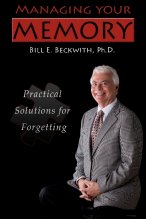
  • Managing Your Memory


    Practical Solutions for Forgetting

    Order Now
  • Shopping Cart

    Your cart is empty
    Visit The Shop
  • Upcoming Events

    Sorry, there aren’t any upcoming events right now. Check back soon!
  • Sign up for our mailing list.


  • Categories